Ebola outbreak a Global Health Emergency: World Health Organization

World Health Organization designate Ebola outbreak a Global Health Emergency. WHO also clarified that Ebola outbreak is not akin to Covid Pandemic emergency. It is a zoonotic disease. It spreads between animals and humans
Currently Ebola virus outbreak is in Congo and Uganda. WHO declare it as a public health emergency of international concern in these effected areas.
Viruses constantly change through mutation. As a result, a variant develops when one or more mutations distinguish it from other circulating strains. During the COVID-19 pandemic, scientists have documented multiple variants of SARS-CoV-2 across the world.
LEARNING FROM HOME/ WITHOUT CLASSES/ BASICS
Ebola
Ebola disease (EB), often fatal, is a rare disease. It causes severe illness in humans. Ebola is caused by viruses. EB this time attributed to the Bundibugyo strain of the virus
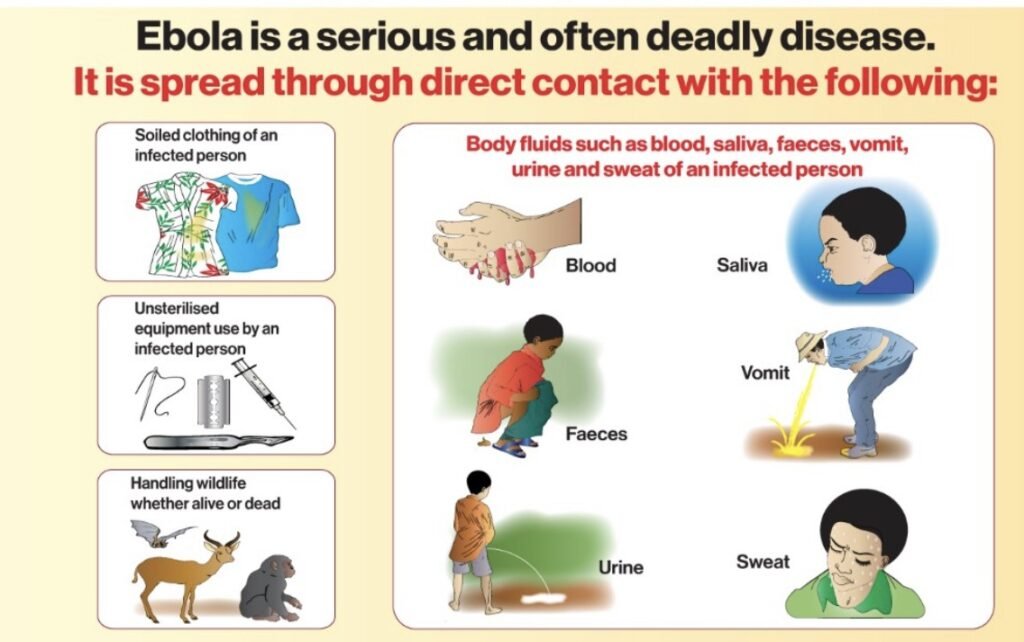
It is believed that fruit bats of the Pteropodidae family are natural hosts of the virus. human population can be infected by the virus. People may be infected if have close contact with the blood, secretions, organs or other bodily fluids of infected animals. Such as fruit bats, chimpanzees, gorillas, monkeys, forest antelope or porcupines found ill or dead or in the rainforest.
The symptoms of Ebola disease can be sudden. It include fever, fatigue, malaise, muscle pain, headache and sore throat. These are followed by vomiting, diarrhoea, abdominal pain rash. And symptoms of impaired kidney and liver functions.
Variant of Interest
A variant of interest refers to a strain that scientists suspect may be more contagious than the original virus, cause more severe illness, or partially evade the protection provided by vaccines.
Variant of Concern
In contrast, a variant of concern shows clear evidence of increased transmissibility or more severe disease, such as higher hospitalization or death rates. Additionally, it may significantly reduce the effectiveness of antibodies formed after infection or vaccination. In some cases, such variants also weaken the effectiveness of treatments or vaccines or interfere with diagnostic detection.
Infectious agents come in many shapes and sizes. Categories include:
- Bacteria
- Viruses
- Fungi
- Protozoans
Bacteria
Bacteria are one-celled organisms that can be seen only with a microscope.
Not all bacteria are harmful, and some bacteria that live in your body are helpful. For instance, Lactobacillus acidophilus — a harmless bacterium that resides in your intestines — helps you digest food, destroys some disease-causing organisms and provides nutrients.
Some infections caused by bacteria include:
- Strep throat
- Tuberculosis
- Urinary tract infections
- Cholera.
- Leprosy.
- Plague.
- Syphilis.
- Anthrax.
Viruses
Viruses are much smaller than cells. In fact, viruses are basically just capsules that contain genetic material. To reproduce, viruses invade cells in your body, hijacking the machinery that makes cells work. Host cells are often eventually destroyed during this process.
Viruses are responsible for causing many diseases, including:
- AIDS
- Common cold
- Ebola virus
- Genital herpes
- Influenza
- Measles
- Chickenpox and shingles
Fungi
There are many varieties of fungi, and we eat several of them. Mushrooms are fungi, as are the molds that form the blue or green veins in some types of cheese. And yeast, another type of fungus, is a necessary ingredient in most types of bread.
Other fungi can cause illness. One example is candida — a yeast that can cause infection. Candida can cause thrush — an infection of the mouth and throat — in infants and in people taking antibiotics or who have an impaired immune system. Fungi are also responsible for skin conditions such as athlete’s foot and ringworm.
Protozoans
Protozoans are single-celled organisms that behave like tiny animals — hunting and gathering other microbes for food. Many protozoans cause diseases, such as:
- Giardia
- Malaria
- Toxoplasmosis







0 Comments