Supreme court ruling for Passive Euthanasia

On Wednesday, the Supreme Court of India allowed doctors to withdraw life-sustaining medical support for 32-year-old Harish Rana. Rana has remained in a persistent vegetative state since 2013. The Court said that the procedure must be carried out humanely and carefully.
This decision has once again highlighted the debate around passive euthanasia and the right to die with dignity in India.
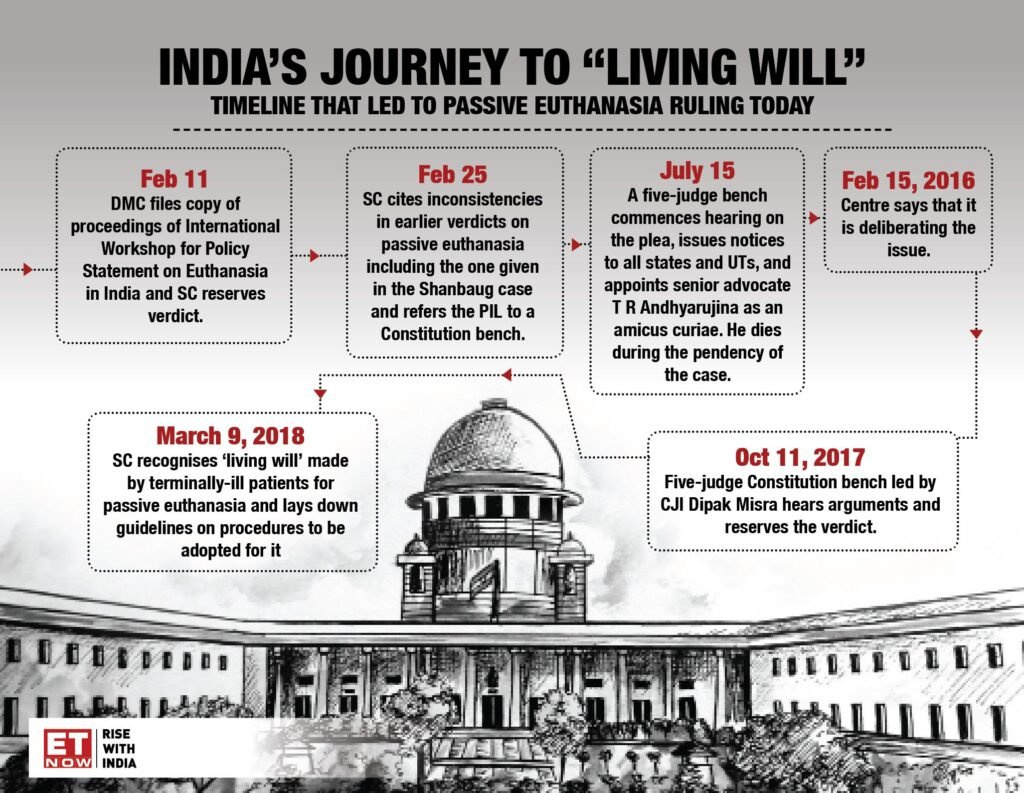
As a result, the Supreme Court has heard many important cases on this issue. These judgments gradually shaped India’s legal framework on passive had. They also clarified how the law should balance medical ethics, patient rights, and human dignity.
Therefore, the latest ruling adds to a series of earlier decisions that recognise the concept. These cases continue to guide hospitals, families, and courts when dealing with such sensitive situations.
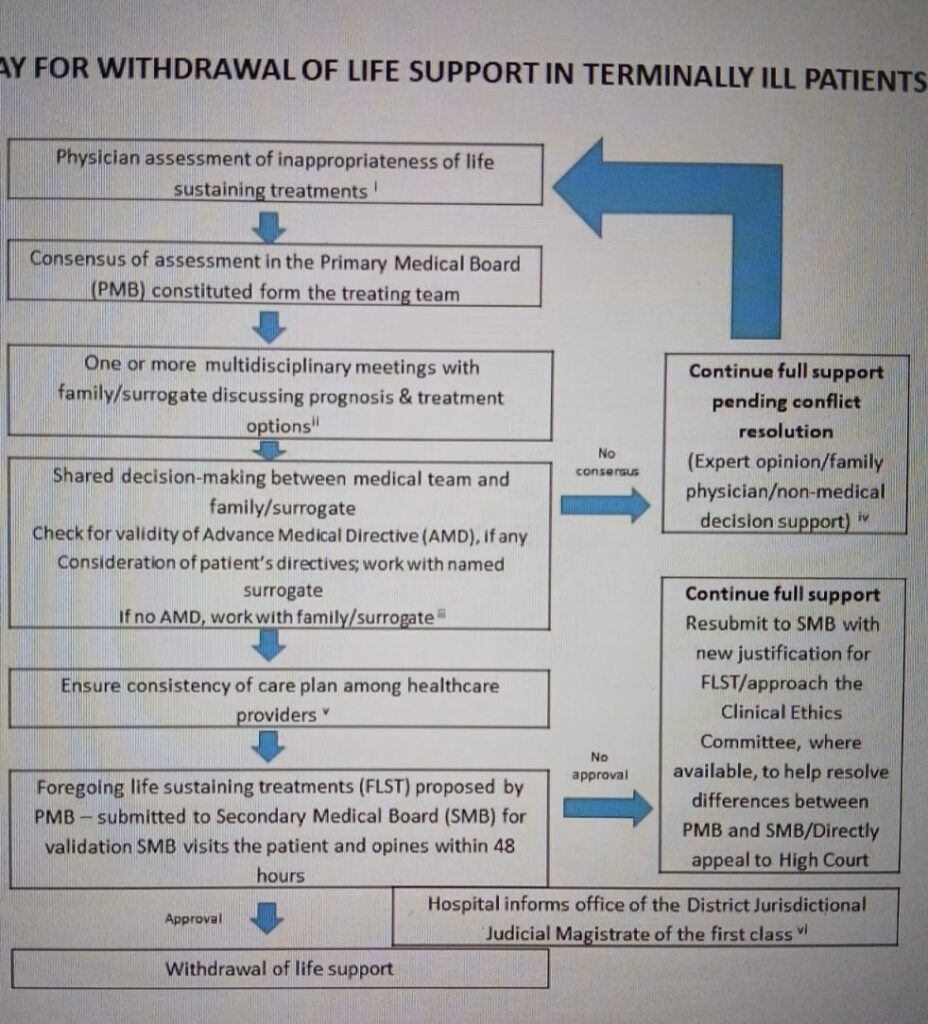
2024 the Health Ministry issued draft guidelines for Passive Euthanasia for public comments.
Draft guidelines outline conditions for withdrawal of life support in terminally ill patients.
Terminal illness defined as an irreversible or incurable condition from which death is inevitable in the foreseeable future. Doctors are advised to make a considered decision. They take into account several factors like
1. The patient being declared brainstem dead
2. A poor prognosis with no likely benefit from treatment
3. A documented informed refusal from the patient or their family.
4. Severe brain injuries with no recovery after 72 hours.

PASSIVE EUTHANASIA



0 Comments