Remembering Mahatma Gandhi: His Legacy on Martyrdom Day

Martyrdom of Mahatma Gandhi
On January 30, 1948, Mahatma Gandhi was assassinated, bringing a tragic end to the life of a global icon of peace and non-violence.

AI GENERATED IMAGE
Early Life and Identity
Mahatma Gandhi (Mohandas Karamchand Gandhi) was born in Gujarat and is honoured as the Father of the Nation. He emerged as a social reformer and a national leader during India’s freedom struggle.
Philosophy of Non-Violence and Satyagraha
Gandhi introduced the concept of Satyagraha, a method of resistance based on truth and non-violence. Through this philosophy, he transformed political protest into a moral and ethical movement.
Role as a Thinker and Writer
Along with activism, Gandhi wrote extensively for newspapers to spread his ideas. He also promoted self-reliance, symbolised by the spinning wheel, which became a powerful emblem of the Indian Independence Movement.
Before returning to India, Gandhi led civil disobedience movements in South Africa to oppose racial discrimination. These struggles shaped his methods of peaceful resistance.
Return to India and Mass Movements
After returning to India in 1915, Gandhi led several landmark movements. These included the Champaran Satyagraha, the Kheda Satyagraha, the Dandi Salt March (1930), and the Quit India Movement (1942).
First Hunger Strike and Labour Reforms
In 1918, Gandhi undertook his first hunger strike in Ahmedabad. Through this action, he supported mill workers demanding a fair wage increase.
Work for Social Equality
Gandhi strongly opposed untouchability and worked for the upliftment of the oppressed. He gave them the name Harijan, meaning “children of God,” to restore dignity and respect.
Political Wisdom and British Proposals
Gandhi openly criticised British policies that lacked sincerity. He described the Cripps’ proposals as a “post-dated cheque on a failing bank,” reflecting his clear political judgment.
Relevance of Gandhi in the 21st Century
The modern world faces challenges such as terrorism, moral decline, ethnic conflicts, and the adverse effects of globalisation. These problems continue to threaten global peace.
Guiding Principles for Modern Society
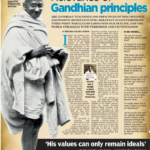
In this context, Gandhi’s principles of Satya (truth), Ahimsa (non-violence), and Satyagraha remain highly relevant. They offer peaceful solutions to conflict and injustice.Gandhi’s non-violent methods form a core area of peace and conflict research today. His idea of Sarvodaya focuses on inclusive development through ethical means.
Vision of Holistic Development
Gandhi promoted village self-sufficiency, women empowerment, sanitation, and moral living. These ideas directly address today’s social and developmental challenges.
Global Challenges and Gandhian Solutions
As global issues now include border disputes and nuclear threats, Gandhi’s philosophy offers a path toward sustainable peace and coexistence.
Global Influence and Legacy
Gandhi’s ideas inspired leaders worldwide. The civil rights movement led by Martin Luther King Jr. and the anti-apartheid struggle under Nelson Mandela reflect the lasting impact of Gandhian philosophy.




0 Comments